

CURATING THE PERSONAL to PROTECT THE COLLECTIVE
CURATING THE PERSONAL to PROTECT THE COLLECTIVE
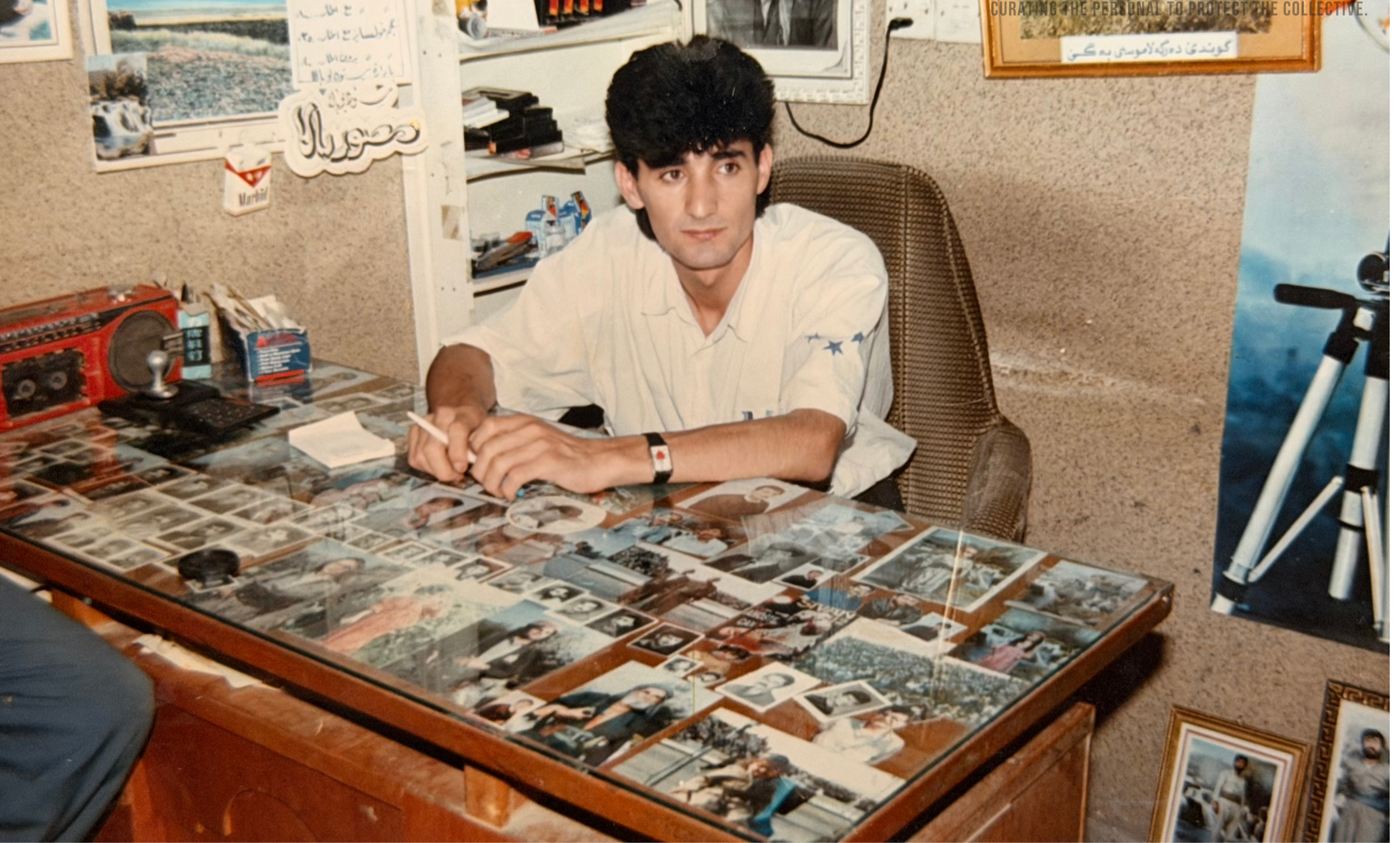
A Kurdish Family Archive
Balay Archives is a family-held cultural archive dedicated to the preservation, celebration, contextualization, and sharing of Kurdish life as documented through photographs, art, writing, and personal records. The materials in this archive were created primarily in the 1980s and 1990s by members of the Balay family, including work produced through photo Studio Balay, during a period when Kurdish history was rarely documented by institutions and even more rarely preserved with care.
This archive is grounded in a simple but essential principle: communities must retain the authority to document and tell their own stories. Too often, Kurdish life has been recorded from the outside, fragmented, politicized, or stripped of everyday context. This archive exists as a corrective to that absence, preserving memory from within the community itself.
Through photographs, letters, poetry, and personal records, the archive preserves the daily rhythms, memories, and resilience that define Kurdish life and identity. This work is shaped not only by what was captured through a camera lens in Kurdistan, but also by the realities of displacement, rebuilding life across borders, integrating into new societies, and carrying memory far from home. Like many Kurdish families, the Balay family carried memory across borders with limited means. What survives of the Balay archive exists because these materials were deliberately safeguarded. During journeys in search of safety and freedom, these photographs and writings were placed in envelopes, hidden at the bottom of suitcases, and carried across borders under conditions of uncertainty and risk. In the process of leaving Kurdistan, these items were prioritized over personal belongings, often taking the place of clothing and other essentials. These materials survived not because they were formally archived, but because they were protected with intention.
For Kurdish communities in the diaspora, where distance can risk the erosion of lived history, Balay Archives serves as an act of safeguarding, ensuring that future generations remain connected to their cultural and historical inheritance. What begins as a family archive represents a fragment of a much larger collective history, the history of a people whose stories have often been told by others. The history of the Kurds.
Balay Archives approaches each image and record not only as a personal artifact, but as part of a broader historical narrative. It seeks to bridge the intimate and the collective, curating the personal to protect the communal, and contributing to a more complete understanding of Kurdish life across generations.
To document a family, in this context, is to document a stateless nation of over 40 million people.